Search This Blog

Showing posts with label Mistakes. Show all posts

Thursday, 2 April 2015

Three business communication mistakes and how to avoid them

Great communication is essential for running a small business, but it’s rarely given priority. Correct these common business communication mistakes and your business will be much better off.


Without good business communication you can lose touch with how your customers are feeling, how the wider market is behaving and importantly what your competitors are up to. Here are three areas where communication is often forgotten.

1. Not responding to customer feedback

Feedback comes in many forms, whether a formal written complaint, a comment on social media, a review on a review website, verbal feedback or a testimonial. Businesses who don't respond to feedback aren't showing their manners and are losing an opportunity to create better relationships with their customers.
The fix: If your customers are taking the time to mention how they feel, thank them for their opinion, even if it is negative. Responding shows that you value their contribution.
“ Customers who complain actually still want to work with your business (or perhaps need your business); if they didn't care they would just move on.  ”
If it’s positive feedback, show your thanks and you'll probably find more love coming your way in the form of referrals and repeat business. A quick email to say thank you is good; a card/box of chocolates/voucher – even better.
If it’s negative feedback, thank them for expressing their concerns and you could win a fan for life. Most people just want to be heard. Call them and talk to them about the situation, let them know you value their opinion and that you'll get back to them when you've reviewed the situation more closely.
Remember: customers who complain actually still want to work with your business (or perhaps need your business); if they didn't care they would just move on. 

2. Not seeking customer feedback

Your service/product is fantastic and your sales are good, but then a competitor with a similar offering comes into the market. They have spent considerable time talking to their potential clients, providing free samples, providing free consultations to get feedback from the market to improve their product. All of a sudden they are leading the way and you are now playing catch-up. There is a simple way to avoid this situation.
The fix: Seek feedback from your clients. Take every interaction with your clients as an opportunity to find out what they think about your product/service. That doesn’t mean you need to conduct a survey every time. Surveys do have their place but consider your market – they may already be over-surveyed!
  • When you are on the phone with a client about another matter end the call by asking if they were happy with a previous service/product provided.
  • Call back a client who had complained previously, tell them what you've done to address the issue and ask for their feedback.
  • A quick "How are we doing?" form given to clients at the end of a job may also yield some interesting feedback.
Armed with this information you can make better decisions to help you stay competitive.

3. No internal communication strategy

When businesses grow from being a one- or two-person operation to having multiple employees or contractors many businesses don't consider that the communication systems and processes they used when they were smaller just won't work with a larger team.
The fix: Make sure you plan how you'll keep your extended team informed and involved in what is happening in your business. Whether you have:
  • a 10-minute catch-up each morning in person or via Skype
  • a formal minuted weekly/fortnightly meeting
  • an "on the boss" lunchtime catch-up
  • scheduled email updates
  • a noticeboard.
Make sure it works for your business. If you have a mobile or decentralised team, communication is even more important – spend some time getting it right.
Keeping your clients and extended team involved in your business will help you to build a more engaged team who'll help you keep ahead of the pack.

Wednesday, 28 January 2015

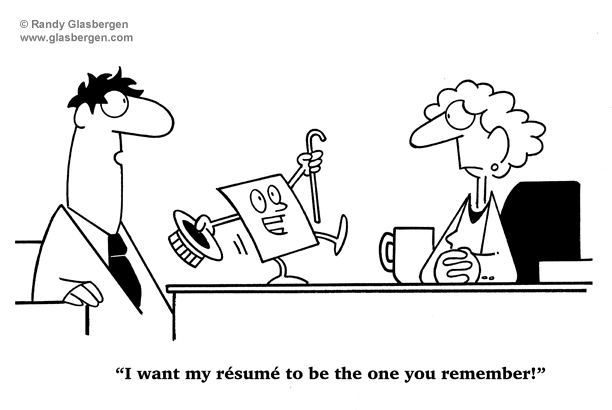
The Biggest Mistakes I See on Resumes, Part 2: Your top 8 questions

I was blown away that my first article got over 2 million views. I've always been passionate about helping people find good jobs. But my advice in "The Biggest Mistakes I See on Resumes" was just a starting point: the basic stuff we all need to nail to get to that interview. (And remember, the ONLY purpose of a resume is to get you that interview!)
Among the 3,500+ comments, eight questions came up again and again. Since these posts are my 20% time project I can’t respond to each person. But so many people are facing the same issues that I want to address the biggest ones.
One caveat: these are my opinions, not official company policy. My qualifications are that I've personally reviewed more than 20,000 resumes, coached hundreds of high school and college students, veterans, and people of every age on how to get a job, and lead a recruiting machine that has seen over 20 million applications. But there's still a bunch of stuff I don't know, so take what I write with a grain of salt.
Now, on to your questions:
1. Should I have keywords and jargon on my resume?
Yes, alas, but put them in their own section. A major part of why we have unemployment - and why finding a job is so hard - is because resumes are awful at conveying who you really are and companies stink at screening resumes . Too many companies rely on clumsy software products that sort and filter resumes based on keywords. And too many recruiters do the same thing, looking for fancy schools or company names instead of at what you actually did. (Google applications are screened by real, live people.) Crummy as that is, it's reality. So for now, if you're in a technical field, have a section where you list all your programming languages. If you're in other professions, you may want to extract the buzzwords from the job posting and have a "skills" section (doesn't matter what you call it) where you can park your laundry list of jargon. Don't waste space on verbs. Just have a list. Save your compelling writing for the bullet points under each job. Lifehacker has some other good suggestions for getting past the machines. And I'm optimistic that somewhere out there someone is building a MUCH better system for inferring who you really are and understanding what employers really need.
2. Should I pay someone to write my resume?
Nope. See my post here on how to write a resume that will get you noticed. Even better, find someone like you who already has the job you want. If you're a veteran, find someone from your service who works in the job and company you want. If you're a student, find an alumna/-us who has your dream job (your career center will have resume books you can mine). Emulate their resume. (Notice I didn't say "copy" ... big difference!) Look at how they described their experiences and accomplishments. They wrote things in a way that got noticed. They got it right. Do what they did. Don't waste your money on something you can get for free.
3. Should I include organizations where I worked more than 20 years ago?
You don't need to. For a competent hiring manager, your early experience isn't relevant. No one cares that I worked at an Olive Garden 20+ years ago. So on my resume I can pick some arbitrary cut-off point, have a "Prior experience" section, and summarize that I worked at a range of jobs in restaurants, non-profits, and manufacturing.
4. Do resumes predict performance?
I haven't seen anything to suggest they do. Resumes are a very poor information source. Work sample tests are actually the best predictor of performance, followed by tests of cognitive ability, which are best assessed using structured interviews. I've got three chapters explaining how you can become a world class interviewer in my book WORK RULES!, coming out in April, if you’re interested in learning more.
5. The best people don't always have the best resumes. Excluding someone because of a typo is stupid and you're a horrible person for doing that.
OK, (a) that's not a question. And (b), I confess that I do occasionally overlook an error, for example if the person writing the resume isn't a native English speaker. But (c), from the recruiter's perspective, if they have a choice between two equally impressive resumes, I think we can agree that the one that says "professional booger" instead of "blogger" is probably not going to get a call.
6. Shouldn't HR departments and recruiters work harder to find the best people? Why put the blame on the job seeker?
I want everyone to have the best possible chance of landing their dream job. That means controlling the parts of the application process you can. You can control every single word on your resume. You can't control the quality of the person reading it. But I will tell you that at recruiting firms they only get paid for filling jobs, so they do look hard at applications. What they see is in your control.
7. I'm a mom (or dad) coming back into the workforce after time off with my child. How do I explain the time off?
Don't apologize and don't hide. Put down that you took time off for your family. If you volunteered or did part-time work, list that too, but own your decision. Parents who have left the workforce and are coming back in are one of the biggest untapped sources of talent for recruiters. We get that at Google, and more and more other companies are starting to see it too.
8. Hey! You had a typo in your post!
Yes, but I promise you my resume is pristine! ;)